A TENS Device sends mild electrical pulses through skin electrodes, often producing a gentle tingling sensation. For some people, that sensation can temporarily ease pain or make movement feel more manageable. Results vary. Pain researcher Mark I. Johnson’s published work supports a cautious takeaway: TENS may help some users, but its effects are not consistent for everyone. That is a paraphrase, not a direct quotation.
This guide explores ten common types, from compact wired units and wireless models to wearable, dual-channel, and app-connected devices. The details matter. A small unit may slip into a coat pocket, while a larger control panel can be easier to read. Electrode placement, adjustable settings, battery life, and comfort also shape everyday use. More features do not automatically mean better relief.
The right choice depends on the person, the pain, and practical needs. A device that feels comfortable during a short trial may still prove awkward after an hour. This overview is educational, not a diagnosis or treatment plan; people with implanted electronic devices, reduced skin sensation, or other health concerns should seek qualified medical advice before use. One limitation remains: product categories can blur, and labels alone cannot predict personal results. Let’s compare what each type offers, where it may fall short, and which details deserve closer attention.
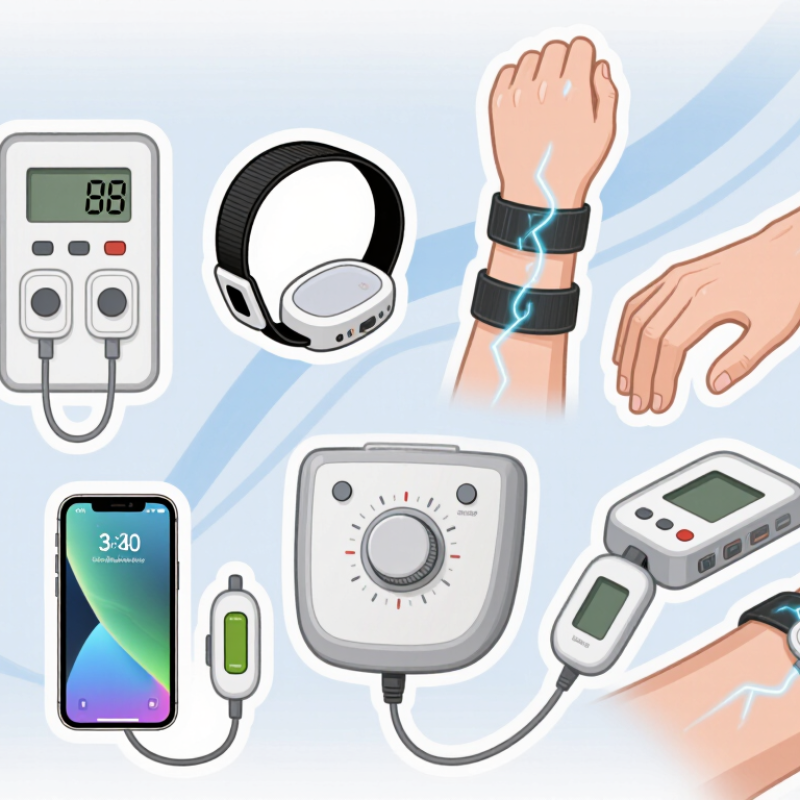
Understanding TENS Devices and Their Role in Pain Relief
TENS, or transcutaneous electrical nerve stimulation, sends mild pulses through electrode pads placed on the skin. You may feel a gentle tingling, not a painful shock. The stimulation may influence pain signals and encourage the body’s own pain-modulating response. Relief varies. It can be brief, and TENS does not treat every underlying cause of pain.
Devices differ in pulse patterns, intensity controls, channel count, and size. Conventional units often deliver steady, higher-frequency pulses. Burst or acupuncture-like settings use different rhythms, while modulation changes the stimulation pattern. Some devices offer two channels for separate pairs of pads; compact wearables are easier to carry but may offer fewer placement options. These are design differences, not proof that one type works best for everyone.
Placement and comfort matter. Follow the device instructions, start at a low setting, and stop if your skin becomes irritated or symptoms worsen. Avoid placing pads on the front of your neck or across your chest. Ask a healthcare professional before use if you have an implanted electrical device, are pregnant, or have reduced sensation. TENS may help manage symptoms as part of a care plan, but it can also disappoint. A clinician can assess persistent or unexplained pain and whether TENS is suitable.
FAQS
Small electrical pulses travel through adhesive pads and stimulate sensory nerves. They may affect how the brain and spinal cord process pain signals. The exact mechanism remains uncertain.
Expect a noticeable tingling sensation. It should feel strong but comfortable, never sharp or burning. Too intense? Lower the setting.
Some people feel a change during or soon after a session. Others notice little difference. Results vary, and the research included different conditions and settings.
A single-channel unit uses one pair of pads for one area. A dual-channel model can control two pairs, such as pads placed near two separate sore spots.
They can reduce dangling wires while commuting or moving around at home. Check that the controls work without a phone, if the device uses an app. Small buttons can be awkward.
Follow the device instructions. Avoid placing pads across the chest, on the front of the neck, or over irritated skin. Use them on clean, intact skin.
Reduce the intensity or stop. Check that the pads sit correctly and contact clean, dry skin. Comfort matters more than chasing a stronger sensation.
Ask first if you have an implanted electrical device, are pregnant, or are unsure whether TENS is suitable. Persistent, worsening, or unexplained pain also deserves professional assessment.
Not necessarily. Preset modes may simplify adjustments, while adjustable settings offer more control. A longer feature list can still disappoint; fit and comfort matter more.
Conclusion
TENS devices offer a non-invasive way to manage some types of pain by delivering mild electrical pulses through electrodes placed on the skin. These pulses may influence how pain signals travel to the brain and encourage the body’s natural pain-modulating responses. The ten types of TENS Device covered in this guide include options with different designs, controls, electrode arrangements, and intended uses, helping readers understand the choices available for home or portable use.
Choosing a device depends on factors such as the location and nature of the discomfort, ease of use, adjustability, and personal comfort. Safe use matters: follow the device instructions, place electrodes only on recommended areas, and stop if stimulation causes irritation or discomfort. TENS may not suit everyone and should not replace professional medical advice or treatment. Understanding its benefits and limitations can help users make informed decisions and care for their device properly.