Executive Technical Overview: The Engineering Paradigm of 4-Channel Electrotherapy
In modern physical medicine and rehabilitation (PM&R), the 4-channel TENS EMS machine represents a critical technological evolutionary leap over traditional single- or dual-channel stimulators. By offering eight distinct electrode contact points controlled through four independent output circuits, these advanced electrotherapy systems enable simultaneous multi-site pain modulation via Transcutaneous Electrical Nerve Stimulation (TENS) and targeted neuromuscular re-education via Electrical Muscle Stimulation (EMS).
From an electrical engineering perspective, designing a clinical-grade 4-channel TENS EMS machine requires strict channel isolation. Unlike lower-tier devices that simply split voltage signals across dual leads—resulting in current drop and unpredictable impedance shifts when multiple electrode pairs contact different skin areas—a true 4-channel system utilizes four galvanically isolated transformers or dedicated microcontroller-driven constant current microcircuits. This isolated topology guarantees that the pulse amplitude (mA), pulse width (µs), and pulse frequency (Hz) delivered to Channel 1 (e.g., cervical spine) remain completely unaffected by the impedance variations or intensity adjustments on Channel 4 (e.g., quadriceps or lumbar muscle groups).
For procurement managers, hospital buyers, and private-label brand owners, specifying a 4-channel TENS EMS machine involves assessing key biophysical interaction parameters:
- Gate Control Pain Modulation (High-Frequency TENS): Operating at frequencies between 80 Hz and 150 Hz with pulse widths of 50 µs to 100 µs, high-frequency TENS selectively depolarizes A-beta sensory nerve fibers. This inhibits nociceptive signal transmission at the dorsal horn of the spinal cord. A 4-channel configuration allows clinicians to envelop complex spinal regions (e.g., lumbar radiculopathy extending into bilateral sciatic nerves) in a unified treatment session.
- Endorphinergic Release (Low-Frequency / Acupuncture-like TENS): Operating at 1 Hz to 10 Hz with pulse widths exceeding 200 µs, low-frequency TENS stimulates A-delta and C fibers to trigger endogenous opioid (beta-endorphin) release. Multi-channel execution allows alternating stimulation modes between agonistic and antagonistic muscle groups.
- Neuromuscular Re-education & Hypertrophy (EMS): Utilizing symmetrical or asymmetrical biphasic square waves at 30 Hz to 80 Hz with programmable ramp-up (0.5s–5s), hold (1s–10s), and ramp-down cycles, EMS recruits Type I and Type II motor units. A 4-channel system facilitates complex movement patterns—such as bilateral knee extension or full-back spinal stabilization—by firing channel outputs in synchronous, asynchronous, or sequential delays.
Commercial Product Recommendations: 4-Channel TENS EMS Configurations
To meet diverse clinical, home healthcare, and sports medicine distribution needs, USHC Medical Instruments Co., Ltd. manufactures three primary tiers of the 4-channel TENS EMS machine. Below are the recommended hardware architectures for global B2B procurement:
Professional Desktop 4-Channel Combo Station
Built for physical therapy clinics, pain management centers, and rehabilitation hospitals. Features continuous mains power with battery backup, dynamic load-sensing isolation (up to 120 mA peak current under 500Ω load), and 60+ pre-programmed clinical protocols.
- Quad-isolated output channels
- Customizable TENS/EMS/IFC modes
- High-contrast 5-inch backlit display
- Medical-grade heavy-duty lead wires
Rechargeable Handheld 4-Channel TENS EMS Device
Designed for high-volume pharmacy retail, orthopedic distributor brands, and post-operative home recovery programs. Combines a sleek, compact footprint with a high-capacity Li-ion battery, USB-C fast charging, and dual-zone intensity locking.
- 8-electrode coverage in a portable housing
- Adjustable pulse rate (1-150Hz) & width (50-400µs)
- Patient compliance meter & safety lock
- Private-label housing & custom UI options
Smart Programmable 4-Channel Performance Unit
Optimized for athletic trainers, sports physical therapists, and recovery brands. Features high-intensity EMS output (up to 100 V peak-to-peak) with precise ramp timing to treat large muscle complexes like hamstrings, glutes, and traps simultaneously.
- Sequential channel firing & delay modes
- Asymmetric biphasic zero-net-DC waveform
- Durable anti-shock silicone protective boot
- Fully customizable packaging & branding
Technical Specification Comparison Matrix
| Specification Parameter | Clinical Desktop Station | Portable Rechargeable Unit | Sports Performance Unit |
|---|---|---|---|
| Output Channels | 4 Independent (8 Electrodes) | 4 Independent (8 Electrodes) | 4 Independent (8 Electrodes) |
| Waveform Geometry | Monophasic, Biphasic Symmetrical, Biphasic Asymmetrical | Asymmetrical Biphasic Square Pulse | Symmetrical / Asymmetrical Biphasic Square |
| Pulse Amplitude (Current) | 0 - 120 mA peak (into 500 Ω load) | 0 - 100 mA peak (into 500 Ω load) | 0 - 100 mA peak (into 500 Ω load) |
| Pulse Rate (Frequency) | 1 Hz - 150 Hz (1 Hz steps) | 2 Hz - 150 Hz (1 Hz steps) | |
| Pulse Width (Duration) | 50 µs - 400 µs (10 µs steps) | 50 µs - 300 µs (10 µs steps) | 50 µs - 400 µs (10 µs steps) |
| EMS Contraction Time (On) | 1 sec - 30 sec | 2 sec - 20 sec | 1 sec - 30 sec |
| EMS Relaxation Time (Off) | 0 sec - 60 sec | 2 sec - 30 sec | 1 sec - 60 sec |
| Power Source | 100-240V AC Adapter / Internal Battery | 3.7V Lithium-ion Rechargeable (USB-C) | 3.7V Lithium-ion / 4x AAA Backup |
| Compliance Standards | IEC 60601-1, IEC 60601-2-10, ISO 13485 | IEC 60601-1, IEC 60601-2-10, ISO 13485 | IEC 60601-1, IEC 60601-2-10, ISO 13485 |
Global Procurement Trends in Electrotherapy Equipment (2025–2030)
Sourcing managers and medical equipment importers must navigate several structural shifts in the global electrotherapy market. Understanding these trends enables buyers to select future-proof product architectures when partnering with original equipment manufacturers (OEMs):
1. Convergence of Multi-Modality Therapies
Sourcing trends show a sharp decline in single-function TENS or EMS devices in professional sectors. Global procurement is shifting toward hybrid multi-modality platforms that integrate TENS, EMS, Interferential Current (IFC), and Microcurrent (MCR) within a single 4-channel TENS EMS machine framework. This convergence allows clinics to treat acute pain, chronic pain, motor re-education, and tissue repair without purchasing multiple standalone capital units.
2. Decentralization to Clinical-Grade Home Healthcare
Post-pandemic healthcare models have accelerated the shift of physical therapy from outpatient clinics to home rehabilitation settings. Buyers are seeking 4-channel devices equipped with "patient lock-out" functions, pre-programmed clinical pathways, and simplified user interfaces. Patients gain multi-muscle coverage at home while healthcare systems maintain safety compliance.
3. Strict Regulatory Surveillance (EU MDR & FDA 510k)
Regulatory bodies worldwide have heightened scrutiny on active medical devices. In Europe, the transition from MDD to EU MDR (Regulation 2017/745) reclassified many electrotherapy devices to Class IIa, requiring rigorous Clinical Evaluation Reports (CER), post-market surveillance (PMS), and robust ISO 13485 Quality Management Systems. Importers require manufacturers with fully maintained technical files to avoid supply chain disruptions.
4. Eco-Friendly Consumables & High-Yield Hydrogels
Beyond the primary control unit, procurement strategies increasingly evaluate the lifetime cost of consumables. 4-channel machines utilize eight electrode pads per session, making biocompatible, low-impedance, multi-use self-adhesive pads essential. Demand is surging for hydrogels that maintain adhesion over 30+ applications without causing skin irritation or impedance spikes.
Product & Technological Development Trends
As digital electronics and biomedical engineering advance, the technological roadmap for the 4-channel TENS EMS machine focuses on four core operational innovations:
Smart Impedance-Sensing & Load Auto-Balancing
Human skin resistance varies significantly across body regions (e.g., lower back vs. quadriceps) and changes over the course of a session as skin hydrates beneath hydrogel pads. Next-generation 4-channel systems incorporate real-time micro-impedance monitoring. If an electrode loses adhesion or skin contact resistance spikes above a safe threshold (e.g., > 3,000 Ω), the device automatically ramps down output current on that specific channel to prevent thermal discomfort or sharp sting sensations, triggering a visual electrode-check indicator.
Asymmetric vs. Symmetrical Pulse Waveform Optimization
While symmetrical biphasic square waves are ideal for large skeletal muscle groups because both positive and negative phases recruit motor units equally, smaller muscle groups benefit from asymmetrical biphasic waveforms. Advanced 4-channel units allow per-channel waveform selection, giving physical therapists the flexibility to apply symmetrical EMS to the hamstrings on Channels 1 and 2 while running asymmetric TENS for localized joint pain on Channels 3 and 4.
Lithium-Polymer Integration with High Power Density
Legacy 4-channel machines relied on heavy 9V alkaline batteries or bulky external power bricks. Modern designs utilize high-density Lithium-Polymer (LiPo) cells coupled with efficient step-up transformers. This architecture achieves compact handheld form factors while maintaining continuous multi-channel output at maximum intensity (100 mA into 500 Ω load across all 4 channels simultaneously) for over 8 hours of clinical use per charge.
Frequently Asked Questions (FAQ) for Global B2B Buyers
Below are answers to technical, regulatory, and commercial questions frequently evaluated by procurement teams when sourcing 4-channel TENS EMS machines:
What is the technical difference between a true 4-channel TENS EMS machine and a 2-channel unit with dual splitter cables?
A true 4-channel TENS EMS machine contains four independent electronic output circuits and separate amplitude controls. Each channel operates autonomously without sharing output current. In contrast, using a dual splitter cable on a 2-channel device divides the output current of a single circuit across two electrode pairs. This causes a significant voltage drop, reduces stimulation intensity, and creates unsafe current imbalances if electrode skin resistance differs between the split sites. True 4-channel architecture guarantees full amplitude (up to 100 mA) across all eight electrodes simultaneously.
How does USHC Medical Instruments Co., Ltd. ensure channel isolation and patient safety?
USHC Medical Instruments Co., Ltd. designs its multi-channel stimulators in strict compliance with IEC 60601-1 (General Safety for Medical Electrical Equipment) and IEC 60601-2-10 (Particular requirements for the safety of nerve and muscle stimulators). Each channel is isolated using dedicated pulse transformers and optocouplers, preventing electrical crosstalk between channels. Additionally, hardware-level auto-shutoff circuits halt output if an open circuit or sudden electrode detachment is detected.
What regulatory certificates are available for global import into the US, EU, and Asia-Pacific?
USHC Medical Instruments Co., Ltd. holds ISO 13485 certification for medical device quality management systems. Product lines feature CE marking compliant with European medical device regulations and FDA-listed configurations for the US market. Complete technical files, Safety Data Sheets (SDS) for hydrogels, biocompatibility test reports (ISO 10993), and EMC test reports (IEC 60601-1-2) are provided to support distributor regulatory submissions.
What custom OEM/ODM options are available for private-label brand owners?
OEM/ODM services cover custom industrial enclosure tooling, custom button layout configurations, tailored graphical user interfaces (UI) on LCD/touch displays, proprietary treatment algorithm programming, branded electrode pad design, custom lead wire lengths/connectors, and complete retail or clinical packaging artwork development.
What is the recommended electrode size and connector standard for 4-channel TENS EMS devices?
The industry standard for 4-channel devices uses 2.0 mm female pin connectors or 3.5 mm snap button connectors. For general electrotherapy, 50x50 mm (2x2 inch) square self-adhesive carbon-film hydrogel pads are standard. For larger muscle groups treated under EMS protocols (e.g., quadriceps or back), 50x90 mm or 50x100 mm rectangular pads are recommended to distribute current density evenly and maximize patient comfort.
What is the typical production lead time and Minimum Order Quantity (MOQ) for custom 4-channel orders?
Standard catalog models typically have an MOQ of 100 to 500 units, with lead times of 3 to 4 weeks. Customized OEM orders involving custom housing colors, private labeling, and custom packaging generally require an MOQ of 1,000 units with a production lead time of 6 to 8 weeks following sample approval.
Enterprise Advantages: USHC Medical Instruments Co., Ltd. Manufacturing Capabilities
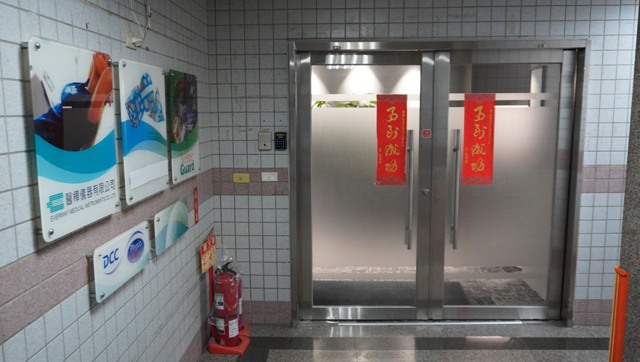
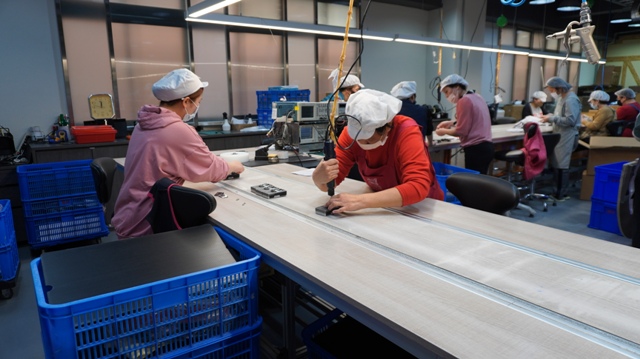
Established in 1989, USHC Medical Instruments Co., Ltd. is a dedicated manufacturer of professional electrotherapy devices, self-adhesive electrode pads, medical probes, conductive garments, and physical therapy traction tables based in Taiwan. With over 35 years of engineering expertise, the company serves distributors, clinic chains, and medical brands across more than 70 countries.
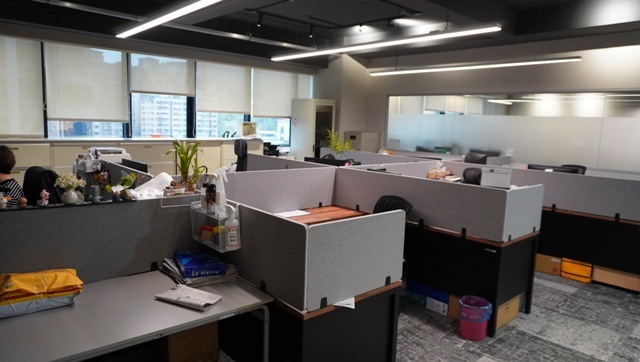
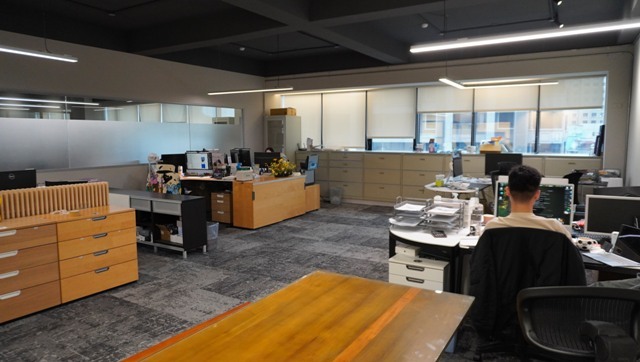
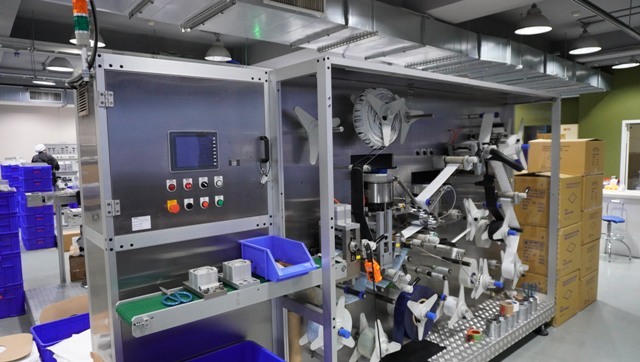
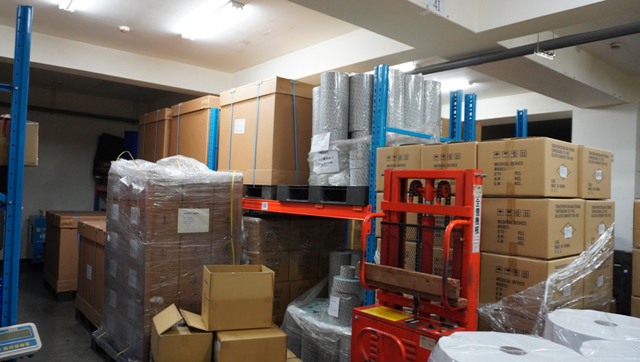
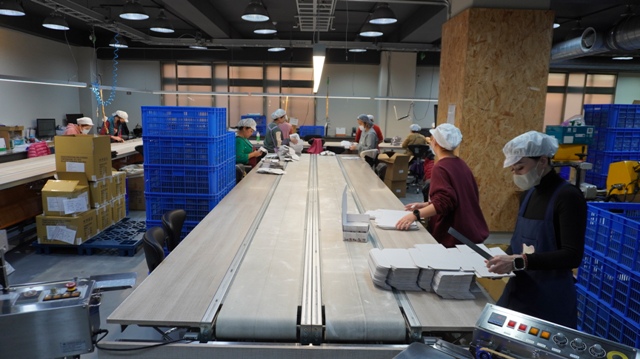
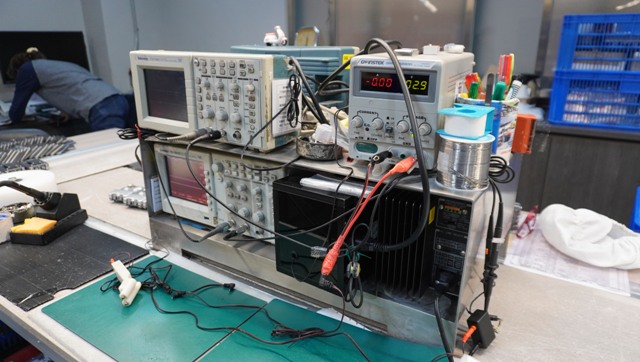
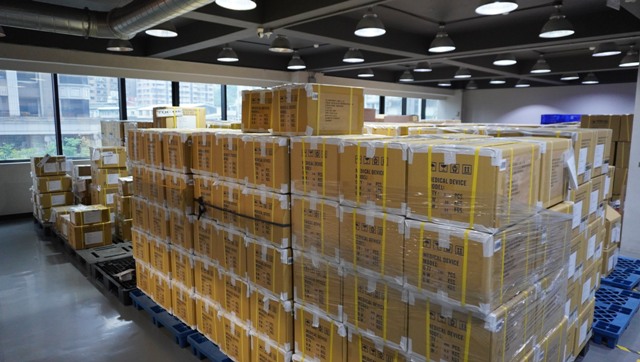
Production operates under a certified ISO 13485 quality system. Facilities have been independently audited on-site by SGS, confirming full traceability from raw component inspection to final functional testing. Integrated production lines produce over 60,000 high-conductivity electrode pads per day, backed by a robust supply chain network of 418 qualified component partners.

Core Strategic Strengths
- Proven 35+ Year Engineering Lineage: Founded in Taiwan in 1989, USHC Medical Instruments Co., Ltd. has developed deep technical expertise in bioelectric signal generation, micro-transformer isolation, and skin-friendly hydrogel formulation.
- SGS Assessed Manufacturing Site: Facilities have undergone rigorous independent third-party on-site audits, offering international buyers full verification of factory scale, production machinery, and regulatory management systems.
- Single-Source System Integration: In addition to 4-channel TENS EMS machines, USHC manufactures matching hydrogel electrode pads, intracavity probes (vaginal/rectal), conductive garments, and traction treatment tables. This unified supply chain reduces purchasing overhead and guarantees accessory compatibility.
- Global Regulatory Support: Dedicated regulatory specialists assist global partners with FDA registration, CE documentation under EU MDR, technical files, and regional registration certificates across North America, Europe, the Middle East, Australia, and Asia.
Partner with a Certified Electrotherapy Manufacturer
Request technical datasheets, sample units, or private-label quotes for our 4-channel TENS EMS machines. Our engineering team responds within 24 hours.
Direct Contact Email: [email protected]